Soffit and fascia are the two parts of a house nobody can name until something goes wrong. Then it is squirrels in the attic, or a gutter hanging off the corner, and suddenly they matter a lot.
What are soffit and fascia?
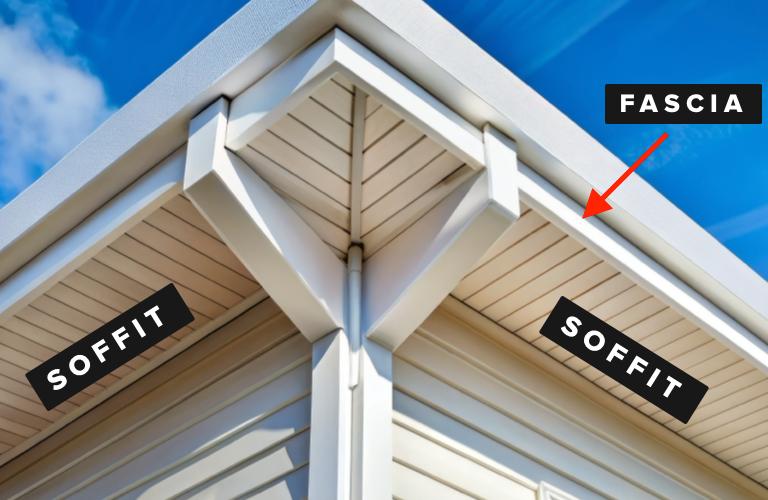
The fascia is the vertical board running along the edge of the roof, nailed across the ends of the rafters. It finishes the roofline and it is what your gutters are hung on.
The soffit is the horizontal panel underneath the overhang, closing the gap between the top of your wall and the roof edge. On most houses it is perforated, and those holes are the air intake for your entire attic.
Why soffit vents matter for attic ventilation
Attic ventilation is a two-part system. Cool air comes in low through the soffit vents, warms, rises, and exits high through the ridge vent. That constant flow is what keeps your attic from reaching 140 degrees in July and what keeps moisture from condensing on the underside of the roof deck in January.
Block the soffit intake, which happens every time insulation gets pushed into the eaves without baffles, and the system stops working. The ridge vent keeps pulling, but now it pulls its air from the path of least resistance, which is your conditioned house through every ceiling light and bath fan. Your attic stays hot, your shingles age early, and you are paying to air-condition the outdoors.
Signs your soffit and fascia need repair
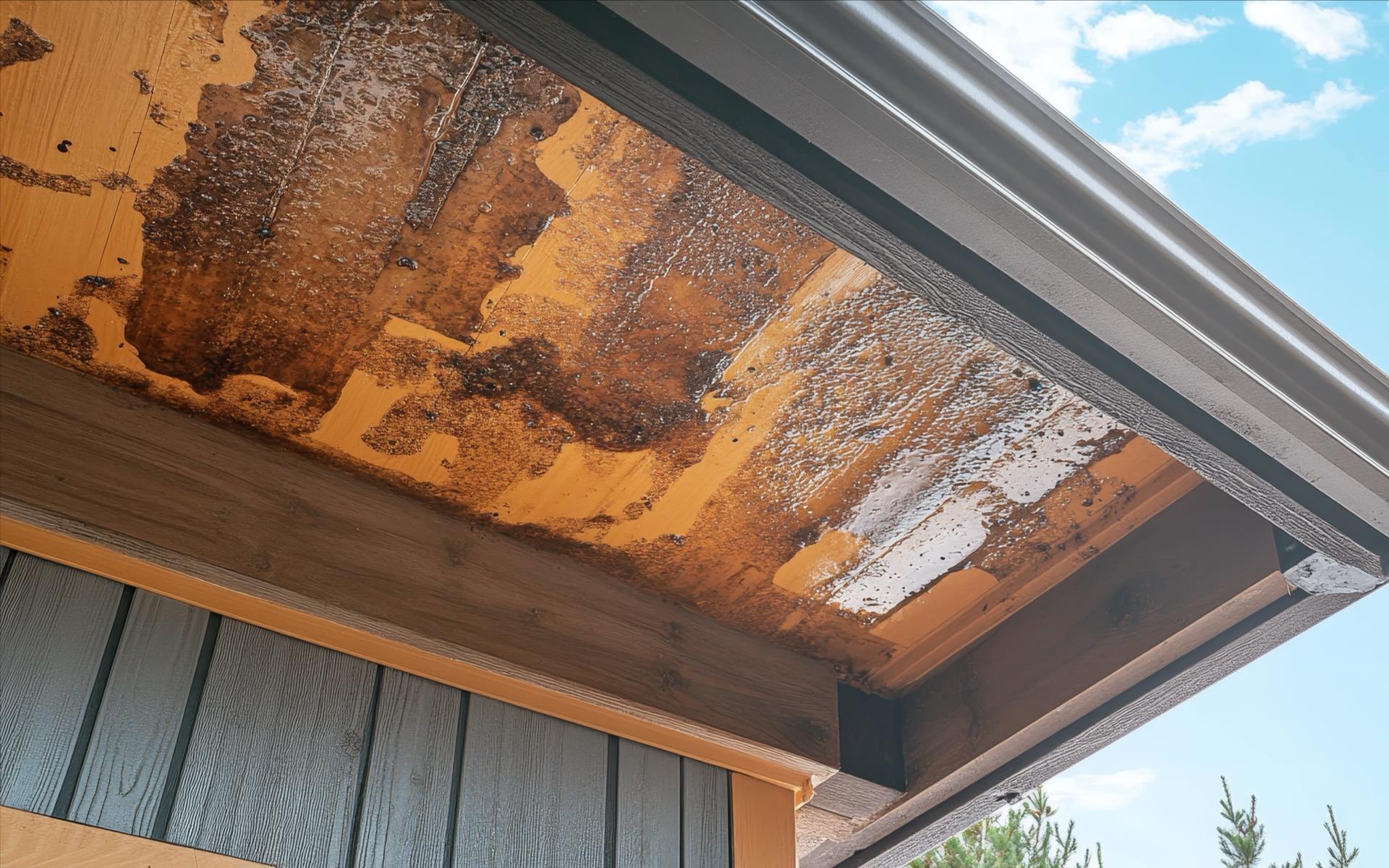
- Peeling or cracked paint on the fascia. Paint fails where wood is holding moisture, so this is usually the first visible sign.
- Visible rot, soft spots, or a board you can push a screwdriver into.
- Sagging or detached soffit panels, which also means the ventilation path is compromised.
- Birds, squirrels, or wasps going in and out at the eave. They found a gap.
- Gutters pulling away from the house. The fascia they are nailed to has softened enough that the hangers no longer hold.
- An attic that feels hot and humid even with a ridge vent installed.
What happens if you ignore it
Water that gets past a failed fascia runs back onto the rafter tails and into the top of the wall. That is framing, and framing repair is an order of magnitude past a board replacement.
Pests are the other one. A squirrel in a soffit cavity will chew insulation, wiring, and whatever else is in reach, and the cleanup and remediation cost more than the repair that would have kept it out.
Fix the cause, not just the board
Here is the part contractors skip. Rotted fascia almost always means water has been running where it should not for years, and the usual reason is the gutter: clogged, pitched the wrong way, or one downspout short for the length of the run.
Replace the board without fixing the drainage and you will be replacing it again. When we find rotted fascia we quote the gutter work with it, because that is the only version of the repair that lasts.
Lincoln Roofing is a family-run NJ roofing company with 20+ years of experience, working out of North Brunswick and serving all of Middlesex County. We handle soffit, fascia, and the gutter work that goes with it. Call 908-307-1116 for a free estimate.
Let’s design your next project.
We are located on Route 130 in North Brunswick and cover all of Middlesex and Monmouth County, plus nearby towns in Somerset and Mercer.
More field notes.
- Nº 01Roofing
Roof Repair vs Replacement: 5 Signs You Need a New Roof
Five signs your roof needs replacing instead of another repair, plus a quick chart, from a Middlesex County, NJ roofer with 20+ years on the job.
February 5, 2026 - Nº 02Roofing
How to Prevent Roof Leaks: 10 Tips From a NJ Roofer
Ten ways to prevent roof leaks, ordered by how much they help, from a Middlesex County, NJ roofer with 20+ years on the job.
November 19, 2025 - Nº 03Gutters
Types of Gutters: Which Is Right for Your NJ Home?
K-style, half-round, box, seamless, and vinyl compared on capacity, cost, and how they hold up through a New Jersey winter.
January 19, 2026